Learn how to design realistic branching scenarios, write meaningful choices and consequences, and build decision-driven training faster. Enrich training with role-play simulations, quizzes, ready-made assets, and AI-generated content. This post was first published on eLearning Industry. Simulation and Scenario-Based Learning Source: eLearning Industry Read More
As Russia’s invasion of Ukraine continues, with both sides stepping up airstrikes and drone attacks in recent weeks deep inside each other’s territory, the UN Children’s Fund (UNICEF) appealed on Tuesday for greater protection for the war’s youngest victims.
Gaza remains unsafe for civilians as Israeli attacks continue, including on schools and canvas classrooms, despite the October Israel-Hamas ceasefire that ended two years of war, the Office for the Coordination of Humanitarian Affairs (OCHA) warned on Tuesday.
For millions across Africa and the developing world, the biodiversity crisis is not an abstract problem – it’s the soil that no longer yields bountiful harvests and the fish that no longer return to coastal waters.
Looking for the best Instructional Design conference in 2026? Explore 15 leading learning, L&D, eLearning, and training conferences worldwide to build skills, discover learning technology, and expand your professional network. This post was first published on eLearning Industry. Instructional Design Source: eLearning Industry Read More
Results may be months away, but efforts are advancing towards enhanced treatment and the world’s first vaccine for the Bundibugyo species of Ebola, the World Health Organization (WHO) said on Tuesday as deaths and cases rise in the largest ever outbreak on record in the Democratic Republic of the Congo (DRC).
Disruption in the Strait of Hormuz has exposed the vulnerability of global trade to a single maritime chokepoint, with early data showing sharp falls in exports of energy, fertilizers and industrial products.
The Flipped Classroom is an instructional strategy and a form of blended learning that has gained traction in educational landscapes over the past two decades. Traditionally, in-class time was dedicated to lecturing, while students were expected to reinforce learned material through homework assignments. The Flipped Classroom reverses this model: students first encounter new concepts outside of class, most commonly through video lectures or curated readings, and then use classroom time for interactive, higher-order learning tasks such as discussions, problem-solving, and collaborative projects. This approach capitalizes on advancements in digital technology, making learning resources accessible anytime and anywhere, allowing students to engage with material at their own pace. Empirical studies suggest several pedagogical and cognitive benefits of the Flipped Classroom model. By shifting passive content delivery outside the classroom, teachers can dedicate in-class sessions to active learning strategies that foster deeper understanding and critical thinking. Interactive activities enable immediate feedback, peer learning, and individualized instructor support. This aligns […]
Course completion is no longer the ultimate measure of learning success. Discover why organizations are embracing skills-based learning to build capable, future-ready workforces in 2026. This post was first published on eLearning Industry. eLearning Design and Development Source: eLearning Industry Read More
Deep expertise reshapes how a person judges what a beginner needs, and that shift quietly turns skilled performers into weak trainers. This article walks through three decades of cognitive research behind that gap and lays out practical steps for pairing Subject Matter Experts with Instructional Designers. This post was first published on eLearning Industry. Instructional Design Source: eLearning Industry Read More
Afghanistan’s dire hunger crisis now affects 14 million people including babies fed on little more than weak tea and bread by their despairing and dirt-poor parents.
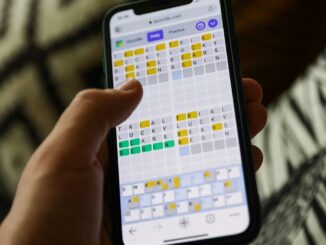
Looking for a different day? A new Quordle puzzle appears at midnight each day for your time zone – which means that some people are always playing ‘today’s game’ while others are playing ‘yesterday’s’. If you’re looking for Monday’s puzzle instead then click here: Quordle hints and answers for Monday, August 3 (game #1652). Quordle was one of the original Wordle alternatives and is still going strong now more than 1,500 games later. It offers a genuine challenge, though, so read on if you need some Quordle hints today — or scroll down further for the answers. Enjoy playing word games? You can also check out my NYT Connections today and NYT Strands today pages for hints and answers for those puzzles, while Marc’s Wordle today column covers the original viral word game. SPOILER WARNING: Information about Quordle today is below, so don’t read on if you don’t want to know the answers. Quordle today (game #1653) […]