A day before a wall of ice, rock and muddy water tore through Himalayan valleys along the Nepal-China border, Dipesh Chapagain was discussing with a colleague just how devastating such a disaster could be.
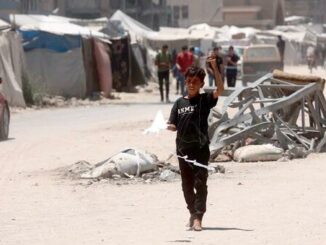
Israeli attacks killed four children and destroyed humanitarian aid supplies in what turned out to be a deadly week in war-ravaged Gaza, the UN emergency relief agency, OCHA, said on Friday.
Explore Paycom pricing, cost, and plans. Learn how Paycom prices work, what affects costs, and what to expect before choosing the platform. This post was first published on eLearning Industry. HR Tools Source: eLearning Industry Read More
Since the beginning of Russia’s full-scale invasion of Ukraine, 3,205 attacks on healthcare facilities have been carried out, World Health Organization (WHO) Representative for Ukraine Jarno Habicht reported on Friday following fresh overnight strikes.
Following a deadly spate of gang attacks on civilians in Haiti and amid reports of illicit weapons slipping into the Caribbean country, the Security Council has called an emergency meeting at 3pm (local time) to hear and discuss the latest developments. UN News app users can follow our coverage here.
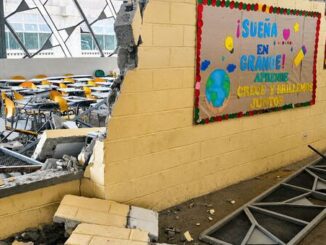
The recent earthquake in Colombia could increase the risk of child recruitment by armed groups in Chocó and Valle del Cauca, where thousands of children remain out of school in areas already affected by conflict, the UN warned on Friday.
Distance learning, often referred to as online learning or e-learning, is an educational process in which students and instructors are separated geographically, and communication takes place via technological means. The concept is not new; it can be traced back to correspondence courses in the 19th century, where lessons and assignments were exchanged through the postal service. However, recent technological advancements, particularly the rise of the Internet, have revolutionized and greatly expanded distance learning’s accessibility and effectiveness. Today, learners participate in virtual classrooms, access digital libraries, and interact with peers and teachers through video conferencing, discussion forums, and collaborative platforms. One of the key advantages of distance learning is its flexibility. Students can access instructional materials anytime and anywhere, allowing them to manage their studies alongside work, family responsibilities, or other commitments. This modality also opens educational opportunities to people who might otherwise be excluded due to location, physical disabilities, or financial constraints. Additionally, distance learning often promotes […]
Learn how structured approval workflows help L&D teams speed up training requests, improve compliance, and eliminate operational bottlenecks. This post was first published on eLearning Industry. Learning And Development Source: eLearning Industry Read More
Learn the essentials of successful media outreach and why providing value to journalists should be the top priority. This post was first published on eLearning Industry. eLearning Marketing Strategies Source: eLearning Industry Read More
The impact of the deadly flood in Nepal has been described as “immense” as the authorities there confirm that 538 bodies have been recovered from the disaster-stricken area.
Researchers just encoded data into a beam of high-speed lightThe data arrived intact, despite significant heat and windIt could transform the internet, communications and more Transmitting data through the air often comes with a key problem: under a barrage of turbulent atmospheric conditions like wind and heat, the data can become distorted and corrupted, requiring great effort to piece it back together. It’s a big obstacle for long-distance internet and communications providers, yet a team of researchers think they’ve just solved this puzzle — and it could have massive implications for how you send data to and from your devices. Researchers from Wits University in South Africa and the University of Bordeaux in France conducted an experiment that involved shooting a beam of light through the air. The light was encoded with optical data, and when they recovered it at the destination site, they found it had arrived with over 98% fidelity, only dropping to 86% fidelity […]
The Ebola Bundibugyo outbreak in the Democratic Republic of the Congo (DRC) requires “urgent” action and funding to rein in its alarming spread, the UN Secretary-General told reporters at UN Headquarters on Thursday.