You can probably find hundreds of websites where you can post a press release with a simple Google search. Are they all valuable to your business? Absolutely not. Learn how to choose the right press release distribution service based on your niche and audience needs. This post was first published on eLearning Industry. eLearning Marketing Strategies Source: eLearning Industry Read More
Repeated delays in bringing lifesaving medicines, prosthetics and more from Israel into Gaza risk having devastating consequences on Palestinians who urgently need them in the war-torn enclave, the UN World Health Organization (WHO) said on Friday.
A free two-week bootcamp for L&D professionals working through real onboarding, deskless-worker training, and SME collaboration challenges, with workshops, templates, and peer networking. This post was first published on eLearning Industry. Source: eLearning Industry Read More
A teenage girl who fled war-torn Sudan for neighbouring Egypt and hopes to pursue a technology degree is an example of why countries must ensure that young refugees can continue to learn.
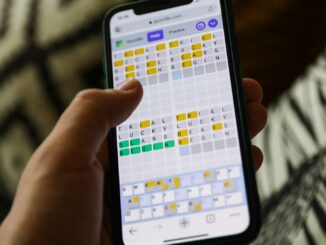
Looking for a different day? A new Quordle puzzle appears at midnight each day for your time zone – which means that some people are always playing ‘today’s game’ while others are playing ‘yesterday’s’. If you’re looking for Thursday’s puzzle instead then click here: Quordle hints and answers for Thursday, October 1 (game #1711). Quordle was one of the original Wordle alternatives and is still going strong now more than 1,500 games later. It offers a genuine challenge, though, so read on if you need some Quordle hints today — or scroll down further for the answers. Enjoy playing word games? You can also check out my NYT Connections today and NYT Strands today pages for hints and answers for those puzzles, while Marc’s Wordle today column covers the original viral word game. SPOILER WARNING: Information about Quordle today is below, so don’t read on if you don’t want to know the answers. Quordle today (game #1712) […]
Looking for a different day? A new NYT Strands puzzle appears at midnight each day for your time zone – which means that some people are always playing ‘today’s game’ while others are playing ‘yesterday’s’. If you’re looking for Thursday’s puzzle instead then click here: NYT Strands hints and answers for Thursday, October 1 (game #942). Strands is the NYT’s latest word game after the likes of Wordle, Spelling Bee and Connections – and it’s great fun. It can be difficult, though, so read on for my Strands hints. Want more word-based fun? Then check out my NYT Connections today and Quordle today pages for hints and answers for those games, and Marc’s Wordle today page for the original viral word game. SPOILER WARNING: Information about NYT Strands today is below, so don’t read on if you don’t want to know the answers. NYT Strands today (game #943) – hint #1 – today’s theme What is the […]
Learn how Instructional Designers can create OSHA-aligned confined space training that improves compliance, competence, safety, and workforce performance. This post was first published on eLearning Industry. Compliance Training Source: eLearning Industry Read More
The UN human rights chief and nine experts on Thursday called on authorities in Tennessee not to pursue any further attempts to execute Christa Pike, saying her case highlights multiple concerns surrounding the death penalty.
The General Assembly met on Thursday to examine the Security Council’s latest veto, cast by China and Russia over a United States-backed sanctions panel of experts on Iran nuclear facilities.
The “Flipped Classroom” is an innovative instructional strategy that inverts the traditional model of teaching. Traditionally, students are introduced to new content in the classroom through lectures, followed by homework or practice outside of class. In a flipped classroom, this sequence is reversed: students first engage with new material on their own, typically by watching online lectures or reading materials at home, and then class time is devoted to exercises, projects, or discussions that deepen their understanding. This model leverages technology and student autonomy, allowing learners to study new concepts at their own pace and come prepared for more interactive, application-focused experiences in the classroom. Scientifically, the flipped classroom draws from constructivist learning theory, which posits that students learn best when they actively construct knowledge through meaningful experiences. Empirical research has shown that when students encounter foundational content beforehand, they are better equipped to participate in higher-order cognitive activities, such as analysis, synthesis, and evaluation, under the […]
Do you have a seat at the table by now? Is your seat constantly moving as well? This post was first published on eLearning Industry. Learning And Development Source: eLearning Industry Read More