SweetRush celebrates five consecutive years on Training Industry’s Top Experiential Learning Technologies list for its innovative custom AI, VR, and XR solutions. This post was first published on eLearning Industry. Source: eLearning Industry Read More
After six days of speeches from the UN General Assembly podium, one word rose above all others: peace. This final edition of The Takeaway distils the messages he said reverberated through the Assembly Hall and looks at where the 193-member body goes from here.
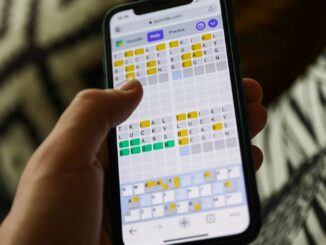
Looking for a different day? A new Quordle puzzle appears at midnight each day for your time zone – which means that some people are always playing ‘today’s game’ while others are playing ‘yesterday’s’. If you’re looking for Monday’s puzzle instead then click here: Quordle hints and answers for Monday, September 28 (game #1708). Quordle was one of the original Wordle alternatives and is still going strong now more than 1,500 games later. It offers a genuine challenge, though, so read on if you need some Quordle hints today — or scroll down further for the answers. Enjoy playing word games? You can also check out my NYT Connections today and NYT Strands today pages for hints and answers for those puzzles, while Marc’s Wordle today column covers the original viral word game. SPOILER WARNING: Information about Quordle today is below, so don’t read on if you don’t want to know the answers. Quordle today (game #1709) […]
South Sudan remains committed to holding general elections in December to conclude its transition period, the country’s Permanent Representative to the United Nations Cecilia Adout Majok Adeng, told the General Assembly on Monday, calling for all sanctions, including the arms embargo to be lifted.
The Democratic People’s Republic of Korea (DPRK) told the UN General Assembly on Monday that its status as a nuclear-armed State was irreversible, arguing that its military capabilities were necessary to safeguard the country’s sovereignty and maintain peace on the Korean Peninsula.
“No country is free of racism.” That warning from US youth activist Marley Dias set the tone on Monday as UN Member States reinvigorated global efforts against racism, discrimination and xenophobia with a new declaration.
The continuing conflict in the Middle East is disrupting global energy markets and pushing up fuel prices, with knock-on effects far beyond the region.
Sudan’s Foreign Minister addressed the UN General Assembly on Monday in place of de facto head of state General Abdel Fattah al-Burhan, whose visa application was rejected by Washington.
Discover what place-based learning is and how it improves engagement and critical thinking. Explore real-world examples, key principles, benefits, challenges, and best practices for educators and learning professionals. This post was first published on eLearning Industry. Employee Training Source: eLearning Industry Read More
Project-Based Learning (PBL) is an educational approach that centers learning around engaging and meaningful real-world projects. Unlike traditional instruction, where knowledge is transferred through lectures and memorization, PBL immerses students in complex, authentic problems that require critical thinking, collaboration, and the integration of diverse skills and subject areas. In a PBL environment, students work alone or in teams over an extended period—sometimes weeks or months—to explore open-ended questions and create artifacts or presentations that demonstrate their understanding and solutions. The theoretical foundation of Project-Based Learning draws from constructivist theories, particularly those of John Dewey and Jean Piaget, who advocated for learning by doing and situating knowledge in context. PBL enables learners to connect academic content with real-life scenarios, fostering deeper understanding, higher-order thinking, and long-lasting retention. Throughout the process, learners must research, plan, iterate, and revise their work, mirroring the practices of scientists, engineers, artists, and professionals outside the academic setting. This active engagement increases motivation and […]
Learn how a blended learning approach saved EUR 10 million. This post was first published on eLearning Industry. Custom eLearning, eLearning Case Studies Source: eLearning Industry Read More
Your spelling is already getting worse. Your design judgment might be next. AI is not making instructional designers obsolete—it is making the good ones think harder, iterate faster, and finally build the adaptive learning they only used to imagine. This post was first published on eLearning Industry. Artificial Intelligence Source: eLearning Industry Read More