Learn how AI strategy consulting services can help your organization prioritize investments and manage risks in the age of Αrtificial Ιntelligence. This post was first published on eLearning Industry. eLearning Marketing Strategies Source: eLearning Industry Read More
Looking for a different day? A new NYT Strands puzzle appears at midnight each day for your time zone – which means that some people are always playing ‘today’s game’ while others are playing ‘yesterday’s’. If you’re looking for Thursday’s puzzle instead then click here: NYT Strands hints and answers for Thursday, July 23 (game #872). Strands is the NYT’s latest word game after the likes of Wordle, Spelling Bee and Connections – and it’s great fun. It can be difficult, though, so read on for my Strands hints. Want more word-based fun? Then check out my NYT Connections today and Quordle today pages for hints and answers for those games, and Marc’s Wordle today page for the original viral word game. SPOILER WARNING: Information about NYT Strands today is below, so don’t read on if you don’t want to know the answers. NYT Strands today (game #873) – hint #1 – today’s theme What is the […]
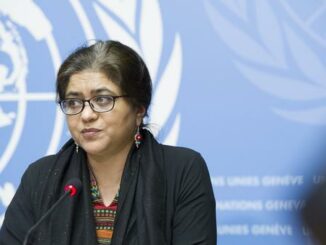
Syria is not alone in tackling challenges, including the hundreds of thousands who remain missing during past tumultuous decades, the head of a UN institution said on Thursday as António Guterres departs on his first visit to the country in his current capacity as Secretary-General.
Learn how strengths-based leadership helps Instructional Designers identify, develop, and leverage employee strengths to improve engagement, performance, collaboration, and team effectiveness. This post was first published on eLearning Industry. Leadership Development Source: eLearning Industry Read More
Independent UN human rights investigators on Thursday called for Iran to immediately halt the execution of 10 men who took part in a protest in the central city of Isfahan earlier this year, warning that some of their relatives have already been called for final visits.
Project-based learning (PBL) is an educational approach that emphasizes active engagement and experiential learning by having students investigate and respond to complex, real-world problems or challenges. Unlike traditional models, which often prioritize rote memorization or isolated skill acquisition, PBL situates learning in meaningful contexts that require collaboration, creativity, and critical thinking. In a typical PBL environment, students work in teams over extended periods of time to research a central question, design solutions, and produce tangible outcomes such as presentations, reports, or prototypes. Teachers act as facilitators or coaches, guiding inquiry, providing resources, and assessing both the process and products of learning. The major theoretical underpinning of project-based learning stems from constructivist educational theories, particularly those advanced by John Dewey and Jean Piaget, which argue that learners construct knowledge most effectively through active involvement and reflection. By grappling with authentic problems, students are required to integrate knowledge from multiple disciplines, thereby deepening their understanding and retention. Furthermore, PBL […]
Completion rates and passing scores tell L&D teams that employees finished a course. They say far less about whether the employee does the job differently afterward. This article looks at the research behind that gap and what teams can build into training design to close it. This post was first published on eLearning Industry. Employee Training Source: eLearning Industry Read More
Satellites can now spot major methane leaks from space within days. Yet only 13 per cent of those alerts lead to any response from the governments or companies responsible.
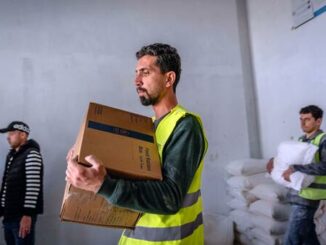
Food security and child nutrition have improved across the Gaza Strip largely due to a scale-up in humanitarian assistance and commercial traffic, but progress remains fragile and could quickly reverse without sustained access, funding and recovery support.
Amar Bendjama, Permanent Representative of Algeria to the UN, was elected on Thursday to serve as the next president of the UN’s Economic and Social Council (ECOSOC).
The Security Council is debating on Thursday how best to settle disputes between States peacefully. Ambassadors will be exploring such themes as effective early warning and how to move from rhetorical support for preventive diplomacy to ensuring more consistent use of its Chapter VI powers under the UN Charter. Follow our live coverage.
As the Iran-US war continues, the key question remains unanswered about how shipping through the Strait of Hormuz will be managed in future – although the UN has reiterated that charging tolls for safe passage runs contrary to international law.