Where children once trained as baseball players, families now sleep under tarpaulins. The stadium at Playa Grande, on Venezuela’s central coast, has become an emergency shelter for people who lost their homes – or cannot safely return to them – after the deadly quakes that struck the country on 24 June.
Drone attacks by advancing rebel fighters who are besieging El Obeid, Sudan, continue to result in civilian casualties, putting around half a million civilians at grave risk of large-scale atrocities.
Learn how to use AI prompts for compliance training with 30 ready-to-use examples for policy summaries, safety drills, quizzes, and role-based scenarios. This post was first published on eLearning Industry. Artificial Intelligence Source: eLearning Industry Read More
Project-Based Learning (PBL) is a student-centered pedagogical approach that emphasizes learning through active engagement in real-world and meaningful projects. Unlike traditional instructional methods, which often revolve around passive absorption of information and standardized testing, PBL tasks students with investigating and responding to complex questions, problems, or challenges over an extended period. This process requires students to apply critical thinking, collaboration, creativity, and communication skills as they design, execute, and present their projects. The teacher’s role in PBL shifts from that of information provider to facilitator or coach, guiding students through their inquiry process. Central to PBL is the notion of authenticity—projects are frequently connected to real-life issues or the student’s own interests, ideally promoting intrinsic motivation and deeper learning. The PBL framework typically incorporates key phases: initial inquiry and problem formulation, research and knowledge acquisition, iterative project development, feedback from peers and instructors, and finally, public presentation or exhibition of the final product. Assessment in PBL extends […]
IT Students Complete Intensive Cybersecurity Workshop, Boosting Awareness of Threats and Data Protection In response to the rapidly evolving landscape of digital threats, a group of IT students recently participated in an intensive, week-long cybersecurity workshop designed to deepen their understanding of current cybersecurity risks and enhance their practical skills in data protection. The workshop, which took place in early April, was organized by the school’s Department of Computer Science in cooperation with external cybersecurity professionals and offered a unique blend of hands-on experience, expert lectures, and interactive discussions. The primary focus of the workshop was to give students an up-to-date perspective on current cybersecurity challenges faced by organizations and individuals alike. Throughout the week, students took part in practical exercises conducted in a simulated environment closely replicating real-world network infrastructures and threat scenarios. Under the guidance of instructors, students learned to identify various forms of cyberattacks—including phishing, malware, and ransomware—and practiced responding to these threats using […]
The continued expansion of areas under Israeli control in Gaza since October’s ceasefire agreement is placing civilians at greater risk and severely constraining humanitarian operations, the UN and humanitarian partners warned on Wednesday.
Fresh scientific evidence and options for harnessing artificial intelligence (AI) were unveiled Wednesday following the launch of the first global, independent scientific assessment of opportunities, risks and impacts by a pioneering UN expert panel.
Making courses with AI is easy, but updating them is a nightmare. This article shares a simple, real-world framework to audit your library, clear out digital clutter, and keep your training accurate over time. This post was first published on eLearning Industry. Learning And Development Source: eLearning Industry Read More
In Venezuela, a rescue operation in La Guaira has succeeded in getting a toddler out alive from under the rubble, six days since the double-earthquake disaster.
Learning today is more accessible than ever. Information is available everywhere, on platforms, in courses, and across devices. However, that doesn’t mean people will engage with the learning content or that it will have a real impact. This post was first published on eLearning Industry. Blended Learning Source: eLearning Industry Read More
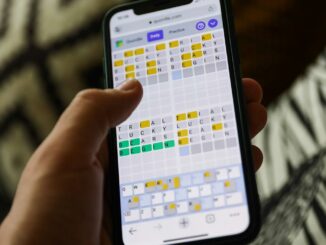
Looking for a different day? A new Quordle puzzle appears at midnight each day for your time zone – which means that some people are always playing ‘today’s game’ while others are playing ‘yesterday’s’. If you’re looking for Tuesday’s puzzle instead then click here: Quordle hints and answers for Tuesday, June 30 (game #1618). Quordle was one of the original Wordle alternatives and is still going strong now more than 1,400 games later. It offers a genuine challenge, though, so read on if you need some Quordle hints today – or scroll down further for the answers. Enjoy playing word games? You can also check out my NYT Connections today and NYT Strands today pages for hints and answers for those puzzles, while Marc’s Wordle today column covers the original viral word game. SPOILER WARNING: Information about Quordle today is below, so don’t read on if you don’t want to know the answers. Quordle today (game #1619) […]