The United Nations on Monday launched a major expansion of its Nairobi headquarters, with Secretary-General António Guterres and Kenyan President William Ruto marking what officials described as a significant milestone for the Organization’s presence in Africa.
The passengers and crew have disembarked from the hantavirus-hit cruise ship MV Hondius in Tenerife and many have returned to their home countries, as the UN World Health Organization (WHO) said the operation demonstrated a “triumph of solidarity”.
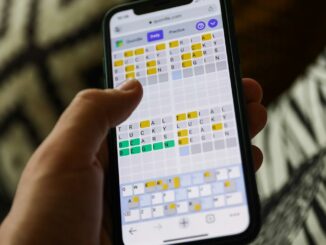
Looking for a different day? A new Quordle puzzle appears at midnight each day for your time zone – which means that some people are always playing ‘today’s game’ while others are playing ‘yesterday’s’. If you’re looking for Monday’s puzzle instead then click here: Quordle hints and answers for Monday, May 11 (game #1568). Quordle was one of the original Wordle alternatives and is still going strong now more than 1,400 games later. It offers a genuine challenge, though, so read on if you need some Quordle hints today – or scroll down further for the answers. Enjoy playing word games? You can also check out my NYT Connections today and NYT Strands today pages for hints and answers for those puzzles, while Marc’s Wordle today column covers the original viral word game. SPOILER WARNING: Information about Quordle today is below, so don’t read on if you don’t want to know the answers. Quordle today (game #1569) […]
Looking for a different day? A new NYT Strands puzzle appears at midnight each day for your time zone – which means that some people are always playing ‘today’s game’ while others are playing ‘yesterday’s’. If you’re looking for Monday’s puzzle instead then click here: NYT Strands hints and answers for Monday, May 11 (game #799). Strands is the NYT’s latest word game after the likes of Wordle, Spelling Bee and Connections – and it’s great fun. It can be difficult, though, so read on for my Strands hints. Want more word-based fun? Then check out my NYT Connections today and Quordle today pages for hints and answers for those games, and Marc’s Wordle today page for the original viral word game. SPOILER WARNING: Information about NYT Strands today is below, so don’t read on if you don’t want to know the answers. NYT Strands today (game #800) – hint #1 – today’s theme What is the […]
More than 150,000 people have been affected by Tropical Cyclone Maila, the latest storm in the Pacific area, which continues to drive what the UN relief coordination office OCHA has described as “significant humanitarian needs” across the Solomon Islands.
UN human rights chief Volker Türk on Monday praised Mongolia’s recent human rights progress during a visit to the country, which recently adopted the region’s first law protecting human rights defenders.
The humanitarian situation in Lebanon continues to deteriorate despite the ceasefire announced last month with Israel, the United Nations said on Monday.
Cloud-first platforms, rising costs, stricter security requirements, and increasing AI expectations are transforming how L&D teams select course creation software. Let’s explore how to choose your first authoring tool (or switch from your current one) with more confidence and fewer costly surprises. This post was first published on eLearning Industry. eLearning Authoring Tools Source: eLearning Industry Read More
Explore skills-based hiring for HR leaders and HR pros. Learn what skills-based hiring is, its definition, benefits, and how to implement skill-based recruitment strategies for better talent decisions and workforce outcomes. This post was first published on eLearning Industry. Human Resources Management Source: eLearning Industry Read More
TikTok has been testing AI summaries for its videosThe feature is throwing up wildly inaccurate text captionsTikTok says it will now pull back on the technology In the age of AI deepfakes, it’s a good idea to treat everything you see on social media with a certain degree of skepticism, but the misinformation problem on TikTok has been made worse with some wildly inaccurate AI captions — and it’s bad enough that the video platform is now scaling back this captioning technology. As reported by Business Insider, TikTok had been testing AI-powered text summaries for videos with a limited number of users. However, after numerous mistakes and hallucinations, the technology is going to be limited to identifying products in videos, rather than fully describing the video’s contents. Those mistakes and hallucinations included describing a video of celebrity Charli D’Amelio talking to the camera as showing a “collection of various blueberries with different toppings”, and labeling a dog-training […]
The role of technology in modern education has become increasingly significant over the past few decades, fundamentally transforming how knowledge is delivered and acquired. Technological tools such as computers, tablets, and internet resources have replaced or augmented traditional teaching methods, enabling more interactive and engaging learning experiences. These advancements facilitate access to a vast array of educational materials, such as digital textbooks, online lectures, and interactive simulations, transcending the limitations of physical classrooms and printed resources. Technology also supports differentiated instruction by allowing students to learn at their own pace and according to their individual learning styles, thereby promoting personalized education. Moreover, technology fosters collaboration and communication among students and educators on a global scale. Online platforms and learning management systems, such as Google Classroom and Moodle, allow for real-time communication, sharing of resources, and collaborative problem-solving irrespective of geographical boundaries. These platforms enable educators to track student progress efficiently and provide timely feedback, enhancing student engagement […]