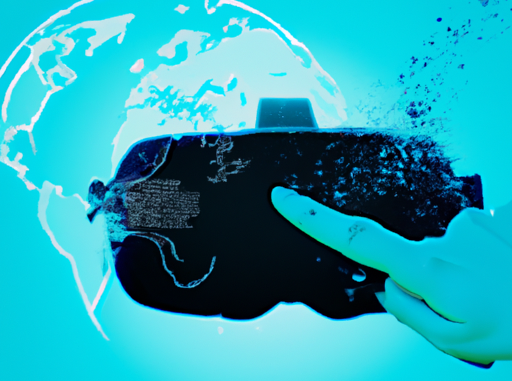
Impact of Virtual Reality in Modern Education: Exploring New Learning Dimensions
Virtual Reality (VR) has emerged as a significant force in the transformation of modern education, offering students, teachers, and institutions new pathways to engage with knowledge. Its development has accelerated over recent years, making immersive learning experiences more accessible and effective across a growing variety of subject areas.
One of the most notable impacts of VR in education is its ability to bridge the gap between theory and practice. For instance, students in medical training can now practice surgical procedures in a risk-free, fully simulated environment, gaining valuable hands-on experiences that were previously difficult to access outside of actual operating rooms. Similarly, engineering students may manipulate complex machinery or experiment with architectural models in three-dimensional space, which deepens their practical understanding far beyond what textbooks or traditional computer aids could offer.
In addition to enhancing practical skills, VR supports more inclusive and personalized learning. Learners with special educational needs can benefit from customizable virtual environments that reduce distractions and adapt to individual requirements. Language acquisition is also revolutionized by VR, allowing students to virtually “travel” and practice real-world interactions in different cultural settings.
An important aspect of VR in education is the motivation and engagement it generates. Studies have shown that students are more likely to retain information and develop a positive attitude towards learning when they are actively involved in realistic, interactive lesson scenarios. For example, VR field trips enable exploration of historical sites, biological processes, or astronomical phenomena that would otherwise be impossible or prohibitively expensive.
Our school has begun integrating VR modules into selected courses, especially in technical fields such as electrical engineering and information technology. Thanks to modern VR laboratories, students can safely practice diagnostics, circuit assembly, and even hazardous operations—experiences that foster confidence and skill for future employment. Teachers note that VR not only makes teaching more varied but also allows them to assess students’ progress in real time through detailed analytics embedded within educational software.
However, the adoption of VR in education brings certain challenges. The primary concerns include the cost of equipment, the need for specialized teacher training, and the requirement to keep content continuously updated. On the other hand, as technology becomes more affordable and content libraries expand, wider use of VR in schools is expected.
In summary, Virtual Reality is reshaping educational paradigms by enabling immersive, interactive, and highly effective learning experiences. While initial implementation requires investment and careful planning, the long-term benefits—such as enhanced skills, improved knowledge retention, and increased student motivation—support VR’s growing role in the classroom. We look forward to further expansion of VR opportunities and invite students and teachers to explore together these new dimensions of education.
PhDr. Pavel Bartoš, LL.M., DBA (Evropská akademie vzdělávání / European Academy of education)
Leave a Reply