Most customer support training teaches agents what buttons to click. This article explores why that approach fails when agents face unfamiliar systems—and what investigative thinking training looks like instead. This post was first published on eLearning Industry. eLearning Best Practices Source: eLearning Industry Read More
AI is reshaping EdTech faster than platforms and institutions can keep up. Here is what the data actually reveals about the readiness gap, and what it means for anyone building or buying education software today. This post was first published on eLearning Industry. Artificial Intelligence Source: eLearning Industry Read More
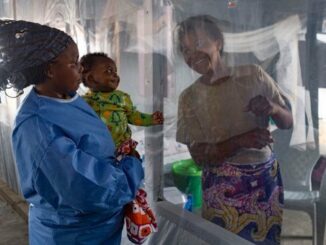
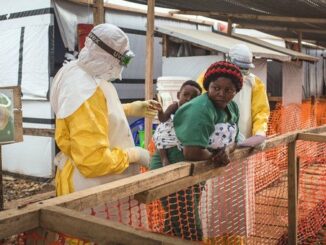
A day after the World Health Organization (WHO) declared the new Ebola outbreak in eastern Democratic Republic of the Congo an international emergency, top global disease transmission experts stressed that the chances of another global pandemic similar to the 2019 coronavirus emergency are increasing all the time.
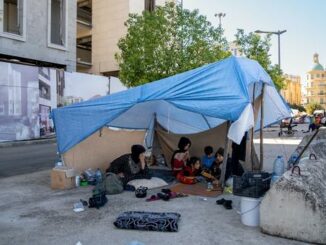
Now is the time to place housing at the heart of sustainable development. That was the message delivered on Monday by UN Secretary General António Guterres to participants at a global forum on urban sustainability under way this week in Baku.
On 9–10 June, join a free online event to discuss the biggest talent development challenges across APAC and ANZ. Attend live sessions, connect with people in your field, and gain insights you can use right away in your work. This post was first published on eLearning Industry. Source: eLearning Industry Read More
The widespread availability of new technology, such as militarised drones and artificial intelligence, means that the current threat of nuclear terrorism is higher than it has ever been.
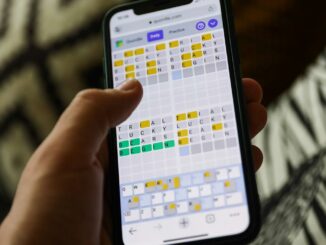
Looking for a different day? A new Quordle puzzle appears at midnight each day for your time zone – which means that some people are always playing ‘today’s game’ while others are playing ‘yesterday’s’. If you’re looking for Sunday’s puzzle instead then click here: Quordle hints and answers for Sunday, May 17 (game #1574). Quordle was one of the original Wordle alternatives and is still going strong now more than 1,400 games later. It offers a genuine challenge, though, so read on if you need some Quordle hints today – or scroll down further for the answers. Enjoy playing word games? You can also check out my NYT Connections today and NYT Strands today pages for hints and answers for those puzzles, while Marc’s Wordle today column covers the original viral word game. SPOILER WARNING: Information about Quordle today is below, so don’t read on if you don’t want to know the answers. Quordle today (game #1575) […]
Experiential learning is an educational approach centered on the principle that knowledge is constructed through direct experience. Rather than relying solely on passive absorption of information, such as listening to lectures or reading textbooks, experiential learning places the learner in active, often real-world situations that require engagement, reflection, and adaptation. This method is grounded in the work of psychologist David Kolb, who formulated the Experiential Learning Cycle: concrete experience, reflective observation, abstract conceptualization, and active experimentation. Learners first encounter or engage in a new experience, reflect on what occurred, conceptualize the underlying principles or patterns, and then use those insights to inform future actions in similar contexts. In this iterative process, learning becomes a continuous cycle of doing, thinking, and applying. Experiential learning can take many forms, including internships, laboratory experiments, field work, simulations, service learning, and project-based assignments. It is distinguished by its focus on participation and personal involvement, allowing students to bridge theory and practice. […]
Redefining engagement for meaningful digital learning. This post was first published on eLearning Industry. Learner Engagement Source: eLearning Industry Read More
Ministers, mayors, international organisations, urban planners and experts are in Baku, Azerbaijan, to tackle one of the world’s fastest-growing challenges: the global housing crisis, which, according to the United Nations, affects nearly 2.8 billion people worldwide.
The World Health Organization (WHO) has declared the ongoing Ebola outbreak in the Democratic Republic of the Congo (DRC) and Uganda a Public Health Emergency of International Concern, citing rising cases, cross-border spread and significant uncertainties about the scale of the epidemic.