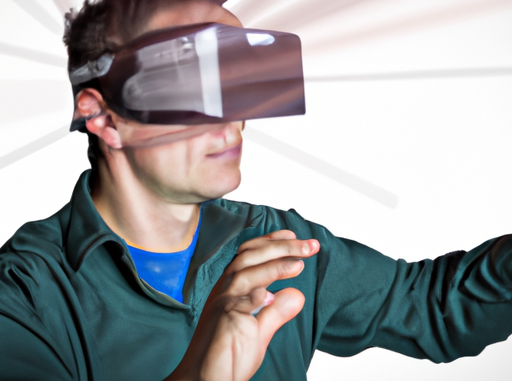
Implementing Virtual Reality in School Education: Advantages and Challenges of New Technologies in Learning
Virtual Reality (VR) has in recent years found its way from the world of entertainment and industry into classrooms and lecture halls around the world. Schools, from primary level to vocational and technical institutions, are increasingly experimenting with the integration of VR into curricula with the aim to make learning more immersive, engaging, and effective.
How Schools Implement VR in Practice
Implementation of VR in education usually begins with small pilot projects focused on selected subjects, where the benefits of technology are most evident. For example, Thomas Jefferson High School in Florida introduced VR headsets in biology and geography classes. Students here can take a virtual tour of the Amazon rainforest or observe the function of human organs “from the inside”. In the context of technical education, the European Academy of Education has begun using VR simulators for training in electrical safety and logistics. Due to the high costs associated with the purchase of hardware, many schools rely on grants, targeted sponsorships, or share equipment through regional educational centers.
Teachers often receive specialized training enabling them to effectively design VR-based lessons and integrate them into standard curricula. Some schools also establish partnerships with technology companies, which provide not only equipment, but also ready-made VR content, or even help develop new educational applications tailored to local educational needs.
Key Advantages of VR for Students
The greatest advantage of VR is the enhancement of experiential learning. The possibility to “experience” historical events, walk through human anatomy, or simulate laboratory experiments, increases students’ motivation and deepens their understanding. For example, in primary school science lessons, VR enables students to safely conduct risky chemical experiments virtually; in language lessons, it allows for interaction with native speakers in simulated environments from around the world.
Furthermore, research shows that VR supports the development of spatial thinking, critical analysis, and teamwork skills. Students who learn through VR demonstrate better retention of information and show greater interest in subjects that previously seemed abstract or challenging. In vocational education, the use of VR simulators is paving the way for safer and more realistic professional training.
Challenges and Obstacles for Teachers
However, VR implementation is not without its complications. A significant challenge is the digital preparedness of teachers, who must not only master the technology itself, but also learn to adapt teaching scenarios and evaluate student performance in a completely new context. There is also a risk of excessive focus on the “wow” effect at the expense of a genuine educational objective.
Another area of concern is the financial and organizational demands involved in purchasing and maintaining equipment, technical support, and regular updates. The necessity to ensure inclusivity (for example, for students with specific learning needs or health limitations) places additional demands on the teachers and school administration. Importantly, long-term use of VR equipment may have effects on vision, balance, or social interactions, so responsible and measured integration is necessary.
Potential Risks and Ethical Issues
With the rise of emerging technologies, the risks associated with data privacy and the ethical use of virtual content also grow. When students create or use avatars, record content in lessons, or communicate online, new questions arise about digital safety and the protection of personal information. Another ethical debate involves the boundaries between virtual and real experience, and the risk of addiction or detachment from actual social interaction.
Outlook and Conclusion
Despite the technological and organizational challenges, the integration of VR into teaching brings a unique opportunity for schools to modernize their approach and offer students educational experiences that would otherwise be inaccessible. The most successful examples show that VR works best where it meaningfully supports the curriculum, rather than replacing traditional teaching, and where teachers and students together learn to exploit its full educational potential.
As the technology becomes more accessible and affordable, it can be expected that VR will play an increasingly important role in various subjects, from science to arts and technical fields. However, successful implementation will require not only investments in equipment, but also in the systematic preparation of teachers, technical support, and the responsible handling of the potential risks and challenges of these new forms of education.
PhDr. Pavel Bartoš, LL.M., DBA (Evropská akademie vzdělávání / European Academy of education)
Leave a Reply