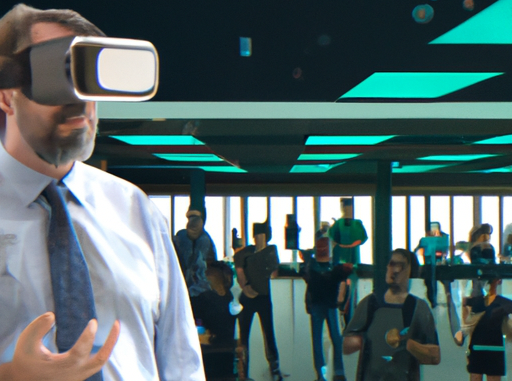
How the Integration of Virtual Reality is Transforming STEM Education
In recent years, the landscape of education has been rapidly evolving, with technology playing an increasingly pivotal role in shaping how students learn and interact with academic content. Among the most transformative technologies is Virtual Reality (VR), which has begun to revolutionize STEM (Science, Technology, Engineering, and Mathematics) education. By offering immersive, interactive, and engaging learning experiences, VR is not only enhancing the educational journey but also preparing students for the future’s technological demands.
Immersive Learning Experiences
One of the most significant benefits of integrating VR into STEM education is the ability to create immersive learning environments. Traditional teaching methods often struggle to illustrate complex scientific concepts, especially those that are abstract or require visualization beyond two-dimensional diagrams. VR allows students to step into a three-dimensional world where they can interact with molecules, explore the vastness of space, or witness geological processes in real-time. This kind of experiential learning taps into students’ curiosity and helps solidify their understanding by allowing them to learn by doing.
Increased Engagement and Motivation
VR is known for its ability to captivate users, and when applied to education, it significantly increases student engagement and motivation. In a VR-enhanced classroom, students are not passive recipients of information but active participants in their learning journey. This participatory approach helps maintain students’ attention and encourages them to explore and inquire further. By transforming the traditional classroom into a dynamic learning space, VR helps students develop a deeper interest in STEM subjects, potentially inspiring future careers.
Personalized and Accessible Education
Another transformative aspect of VR in STEM education is the personalization of the learning experience. VR technologies can adapt to individual learning paces and styles, offering tailored educational experiences that cater to each student’s unique needs. This adaptability ensures that all students, regardless of their starting point, can achieve a comprehensive understanding of complex topics.
Furthermore, VR makes STEM education more accessible. Students can conduct experiments or explore environments that would otherwise be too costly, dangerous, or impossible to experience in real life. For instance, VR can simulate a laboratory setting for students who are homebound or in remote areas, thus democratizing access to quality education.
Development of Future-Ready Skills
The integration of VR into STEM education also equips students with skills necessary for the future workforce. As industries increasingly rely on technology, understanding and utilizing VR tools becomes essential. Students familiar with VR are better prepared for fields such as engineering, architecture, and healthcare, where virtual simulations are becoming the norm. This early exposure fosters not only technical proficiency but also critical thinking, problem-solving, and adaptability—skills highly valued in any career.
Challenges and Considerations
While the benefits of VR in STEM education are significant, there are challenges to consider. The cost of VR equipment and software can be prohibitive for some educational institutions. Additionally, the integration of VR requires careful planning and training for educators to effectively incorporate this technology into their teaching practices.
Nevertheless, as VR technology becomes more affordable and accessible, its role in STEM education is expected to grow. By fostering a hands-on, immersive learning experience, VR is set to transform how students understand and engage with STEM subjects, ultimately preparing them for a technologically advanced world.
In conclusion, the integration of Virtual Reality into STEM education holds immense potential to enhance learning experiences, increase student engagement, and develop critical skills for the future. As educators and institutions continue to embrace this innovative technology, the future of STEM education looks promising, with VR paving the way for a new era of educational exploration and discovery.
PhDr. Pavel Bartoš, LL.M., DBA (Evropská akademie vzdělávání / European Academy of education)
Leave a Reply