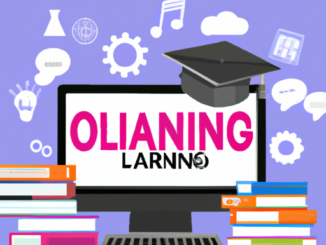
Blended learning, or hybrid learning, is an educational approach that combines traditional face-to-face classroom instruction with online learning activities and resources. This method has gained significant traction in recent years due to its ability to leverage the strengths of both digital and in-person teaching modalities. One of the primary advantages of blended learning is its flexibility, allowing students to access materials and complete assignments at their own pace, often from any location. This flexibility can be especially beneficial for accommodating diverse learning styles and schedules, as well as for providing opportunities for more personalized learning experiences. At the core of blended learning is the integration of technology to enhance and extend learning opportunities beyond the physical classroom. This integration often involves using learning management systems (LMS) to deliver content, facilitate discussions, and assess student progress. Tools such as video lectures, interactive simulations, and online quizzes can complement traditional lectures and classroom activities, providing a more engaging and […]
Exploring the Impact of Technology on Modern Education: How Digital Tools are Transforming Learning Environments In the 21st century, technology has become an integral part of our daily lives, reshaping various sectors, including education. The advent of digital tools has significantly transformed learning environments, shifting from traditional classrooms to more dynamic and interactive digital spaces. This transformation is not only enhancing the accessibility and quality of education but also redefining how educators and students engage with knowledge. Accessibility and Flexibility One of the most profound impacts of technology on modern education is increased accessibility. Online platforms and digital tools have made it possible for students from diverse backgrounds and geographical locations to access quality education. For instance, e-learning platforms like Coursera and Khan Academy offer courses from renowned institutions to anyone with an internet connection, breaking down the barriers of physical distance and socioeconomic constraints. Moreover, technology enables flexible learning opportunities. Students can learn at their own […]
The flipped classroom model is an innovative educational strategy that inverts traditional teaching methods by delivering instructional content, often online, outside of the classroom. This pedagogical approach allows for what is traditionally homework to be completed in class under the guidance of the teacher. The core idea is to shift the more passive aspects of learning, such as lectures, out of the classroom space, thereby maximizing classroom time for interactive activities that reinforce and deepen students’ understanding of the material. The flipped classroom is supported by digital technologies that facilitate the distribution of lecture materials, such as video lectures, podcasts, and digital readings, which students can engage with at their own pace prior to class. The practical implementation of a flipped classroom involves two main components: pre-class preparation and in-class activities. In the pre-class phase, students engage with learning materials that introduce them to new concepts. This phase often includes watching video lectures or participating in online […]
Online learning platforms have revolutionized the way education is delivered, making learning more accessible, flexible, and often more affordable. These platforms, such as Coursera, edX, Khan Academy, and Udemy, utilize the internet to provide educational content to a global audience. They offer a wide range of courses, from basic subjects like mathematics and science to advanced topics in technology, business, and the humanities. By partnering with universities and industry experts, these platforms can deliver high-quality educational materials that cater to diverse learning needs. This democratization of education allows learners from various backgrounds to access courses that were once out of reach due to geographical, financial, or institutional barriers. The flexibility offered by online learning platforms is another significant advantage. Traditional education often requires students to adhere to a fixed schedule, which may not be feasible for those balancing work, family, or other commitments. Online platforms, however, allow learners to study at their own pace and on their […]
Experiential learning, a term popularized by educational theorist David Kolb, is a process through which learners develop knowledge, skills, and values from direct experiences. This pedagogical approach is rooted in the idea that humans learn best through active engagement and reflection on their experiences. Unlike traditional learning methods that often rely on rote memorization and passive absorption of information, experiential learning emphasizes a cycle of action and reflection that deepens understanding and retention. It is a holistic approach that considers the cognitive, emotional, and physical aspects of learning, engaging learners in a more integrated and impactful way. The experiential learning cycle, as proposed by Kolb, consists of four stages: concrete experience, reflective observation, abstract conceptualization, and active experimentation. In the first stage, learners encounter a new experience or reinterpret an existing one. This is followed by reflective observation, where learners consciously reflect on the experience, noting inconsistencies between their understanding and the actual outcome. In the third […]
Exploring the Benefits and Challenges of Implementing Virtual Reality in Education In recent years, Virtual Reality (VR) technology has gained significant attention across various sectors, with education being one of the most promising fields for its application. At the European Academy of Education, we recognize the transformative potential of VR in reshaping the educational landscape. By immersing students in interactive, 3D environments, VR offers unparalleled opportunities for experiential learning. Yet, as with any innovative technology, its implementation presents both remarkable benefits and notable challenges. The Benefits of VR in Education Enhanced Engagement and Motivation: VR creates immersive experiences that can captivate students’ attention more effectively than traditional methods. By enabling students to explore environments otherwise inaccessible, such as historical sites or the human body, VR can foster a deeper interest and motivation in subjects. Experiential Learning: One of the greatest advantages of VR is its ability to provide experiential learning opportunities. Students can perform virtual experiments, conduct […]
The Rise of EdTech: How Technology is Shaping the Future of Education In recent years, the landscape of education has undergone a significant transformation, driven largely by advances in technology. This evolution, commonly referred to as EdTech (Educational Technology), is reshaping traditional educational models and offering innovative solutions to meet the needs of an increasingly digital world. As we navigate the 21st century, EdTech presents both challenges and opportunities that are pivotal in shaping the future of education. The Digital Classroom One of the most notable changes in education is the shift from traditional classrooms to digital learning environments. This transition has been accelerated by the availability of high-speed internet and the proliferation of digital devices. Today, students can attend classes from virtually anywhere, accessing learning materials, lectures, and assignments online. Platforms such as Google Classroom, Blackboard, and Moodle have become integral to the educational experience, providing tools for teachers to manage coursework and for students to […]
Project-Based Learning (PBL) is an instructional methodology that encourages students to learn and apply knowledge and skills through an engaging experience. This educational approach is student-centered and involves a dynamic classroom environment where learners actively explore real-world problems and challenges. The core idea of PBL is to give students the opportunity to work on projects that have relevance and connection to real-life scenarios, thus making learning more meaningful. By engaging in these projects, students develop critical thinking, problem-solving, collaboration, and various forms of communication skills that are essential in the modern world. Unlike traditional learning, which often involves the rote memorization of facts and a passive intake of information, PBL requires students to take responsibility for their learning process. This often involves interdisciplinary projects where students must draw on knowledge from various subjects to complete their tasks. For instance, a project might involve designing a sustainable community park, which would require understanding ecological principles, mathematical calculations for […]