Sport has always been more than a contest of strength or skill. At its best, it becomes a rare space where people meet as equals – a reminder, as the President of the UN General Assembly put it on Wednesday, that “even in times of division, humanity can find common ground through sport – and an enduring hope.”
Choosing the right eLearning content provider involves more than just looking at pricing. To make a good choice, start by carefully evaluating potential partners to eventually find the one that is perfect for a successful and lasting partnership. This post was first published on eLearning Industry. eLearning Software Source: eLearning Industry Read More
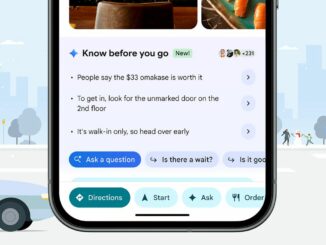
Look out for these four new features in Google MapsThey cover exploring places, EV charging, and reviewsSome Google Maps holiday trend data has also been shared The holiday season is always a busy time for shopping and traveling, and Google wants to help: it’s adding four new features to Google Maps that cover places to go, EV charging, and a way you can give back to the locations you visit. First up is what Google is calling “insider tips” built with Google Gemini. The feature acts like a local guide – or rather, an AI that’s scraped comments from local guides – to give you detailed information on a place that goes beyond the official listing. Some examples Google gives are the best ways to book reservations, what the dress code might be, where you should park, and any secret items that might be on the menu – all delivered in Google Maps for you through Gemini. […]
Blended Learning: Theory, Application, and Impact Blended learning, also referred to as hybrid learning, is an educational model that integrates traditional face-to-face classroom instruction with online and digital learning activities. The primary aim of blended learning is to maximize the effectiveness of both in-person and virtual learning environments by leveraging their respective strengths. In contrast to fully online or traditional classroom formats, blended learning offers greater flexibility for students and instructors, enabling personalized pacing, a diverse range of resources, and greater engagement through varied instructional modalities. The design and execution of blended learning environments can take many forms, including the flipped classroom model, rotational models, and enriched virtual models, each varying in the proportion and sequencing of online and offline components. The theoretical foundation for blended learning draws from constructivist learning theory, which emphasizes that students construct knowledge through active engagement and social interaction. By combining the immediacy and interpersonal connection of in-person instruction with the accessibility […]
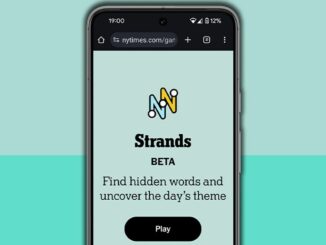
Looking for a different day? A new NYT Strands puzzle appears at midnight each day for your time zone – which means that some people are always playing ‘today’s game’ while others are playing ‘yesterday’s’. If you’re looking for Wednesday’s puzzle instead then click here: NYT Strands hints and answers for Wednesday, November 19 (game #626). Strands is the NYT’s latest word game after the likes of Wordle, Spelling Bee and Connections – and it’s great fun. It can be difficult, though, so read on for my Strands hints. Want more word-based fun? Then check out my NYT Connections today and Quordle today pages for hints and answers for those games, and Marc’s Wordle today page for the original viral word game. SPOILER WARNING: Information about NYT Strands today is below, so don’t read on if you don’t want to know the answers. NYT Strands today (game #627) – hint #1 – today’s theme What is the […]
Looking for a different day? A new Quordle puzzle appears at midnight each day for your time zone – which means that some people are always playing ‘today’s game’ while others are playing ‘yesterday’s’. If you’re looking for Wednesday’s puzzle instead then click here: Quordle hints and answers for Wednesday, November 19 (game #1395). Quordle was one of the original Wordle alternatives and is still going strong now more than 1,100 games later. It offers a genuine challenge, though, so read on if you need some Quordle hints today – or scroll down further for the answers. Enjoy playing word games? You can also check out my NYT Connections today and NYT Strands today pages for hints and answers for those puzzles, while Marc’s Wordle today column covers the original viral word game. SPOILER WARNING: Information about Quordle today is below, so don’t read on if you don’t want to know the answers. Quordle today (game #1396) […]
Custom eLearning solutions offer greater relevance, adaptability, and engagement than generic courses. With microlearning, interactive design, and flexible development, organizations can align training with specific goals and learner needs. This post was first published on eLearning Industry. Custom eLearning Source: eLearning Industry Read More
This article explores 10 practical, human-centered ways tutors can integrate Large Language Models (LLMs) into live sessions to enhance learning without replacing the teacher. This post was first published on eLearning Industry. Artificial Intelligence Source: eLearning Industry Read More
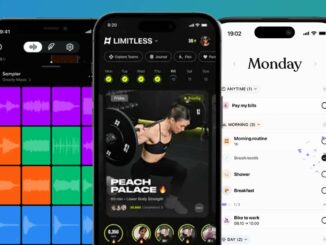
Apple has announced the winners of its App of the Year awardsThey include apps that work across a variety of Apple devicesThe winners span a wide range of app types and genres Apple has just announced its App Store Awards for 2025, with a selection of the best apps being named across a range of categories. Top-notch apps were picked for the iPhone, iPad, Mac, Vision Pro, Apple Watch and Apple TV, and the announcement follows hot on the heels of Google’s 2025 Play Store awards, which were revealed just yesterday. In total, Apple picked three winners in each category, and honorees covered music making, productivity, image editing, academia and more. Here, we’ve put together all the best apps that got the nod from Apple – read on to see if your favorites made the cut. iPhone app of the year finalists BandLabLADDERTiimo (Image credit: BandLab / Ladder / Tiimo) Heralded as the three best iPhone apps […]
Let’s turn to science and address the emotional and cognitive roots of procrastination. This analysis offers some concrete steps to help learners successfully reach their learning goals. This post was first published on eLearning Industry. Learning Psychology Source: eLearning Industry Read More
Adaptive learning personalizes corporate training using models that adjust content to each employee’s needs, pace, and skill level. This boosts engagement, retention, and performance, making learning more effective and results-driven. This post was first published on eLearning Industry. Employee Training Source: eLearning Industry Read More
The rise of AI search engines has brought a new era in demand generation. Now, companies have to compete with each other with a new set of rules to create demand for their services. In this article, we compare old and new rules and present some methods to lead. This post was first published on eLearning Industry. B2B Lead Generation Source: eLearning Industry Read More