More than 720,000 people commit suicide every year and many more attempt it. Now the head of the UN’s World Health Organization (WHO) is calling for “shifting the narrative” on the issue “to challenge harmful myths, reduce stigma and foster compassionate conversations.”
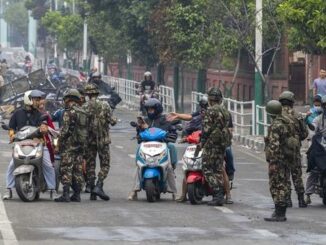
The death toll from Nepal’s youth-led anti-corruption protests has climbed to 30, with political uncertainty continuing on Wednesday – day three of a dramatic crisis that forced the resignation of Prime Minister KP Sharma Oli and left government buildings in flames across the capital and beyond.
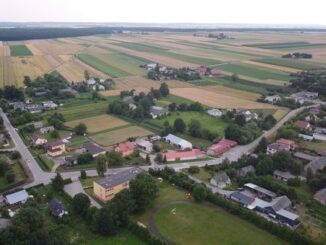
The UN Secretary-General is closely monitoring reports that Russian drones violated Polish airspace overnight into Wednesday, resulting in damage to some residential areas.
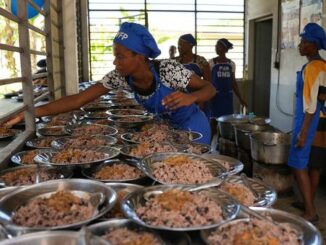
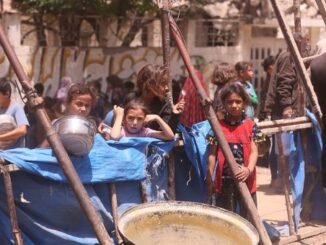
School meals are a crucial way out of poverty into “a new world of learning and opportunity,” according to the World Food Programme (WFP) executive director Cindy McCain.
Project-Based Learning (PBL) is an instructional methodology that emphasizes student-driven inquiry and the active exploration of real-world challenges. Unlike traditional, lecture-based methods that often prioritize rote memorization or isolated skill drills, PBL requires students to engage collaboratively in meaningful projects that mimic the complex problems faced outside the classroom. Through the process, students identify problems, formulate questions, conduct research, implement solutions, and ultimately present their findings. This pedagogical shift is grounded in constructivist theories of learning, chiefly influenced by thinkers such as John Dewey and Jean Piaget, who argued that knowledge is best acquired through hands-on experiences and social interaction. A defining characteristic of project-based learning is its interdisciplinary nature. Projects are designed to integrate multiple subject areas—such as science, mathematics, social studies, and language arts—allowing students to draw connections across different domains of knowledge. For example, a project on sustainable urban development might require students to analyze mathematical data on population growth, evaluate environmental impacts using […]
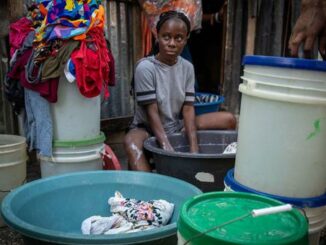
Gang violence, hunger and instability continues to roil Haiti as the UN relief chief declared on Wednesday that “we have to do better” to help the families striving to survive amid an alarming humanitarian funding shortage.
The UN and humanitarian partners warned on Wednesday that nearly one million civilians in Gaza City who have been told to leave by the Israeli military have nowhere safe to go.
Explore how AI-driven Learning and Development is reshaping corporate training. Learn ways to integrate Artificial Intelligence in your L&D strategy and boost workplace learning outcomes. This post was first published on eLearning Industry. Artificial Intelligence Source: eLearning Industry Read More
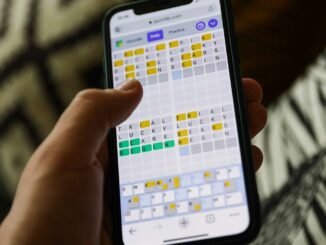
Looking for a different day? A new Quordle puzzle appears at midnight each day for your time zone – which means that some people are always playing ‘today’s game’ while others are playing ‘yesterday’s’. If you’re looking for Wednesday’s puzzle instead then click here: Quordle hints and answers for Wednesday, September 10 (game #1325). Quordle was one of the original Wordle alternatives and is still going strong now more than 1,100 games later. It offers a genuine challenge, though, so read on if you need some Quordle hints today – or scroll down further for the answers. Enjoy playing word games? You can also check out my NYT Connections today and NYT Strands today pages for hints and answers for those puzzles, while Marc’s Wordle today column covers the original viral word game. SPOILER WARNING: Information about Quordle today is below, so don’t read on if you don’t want to know the answers. Quordle today (game #1326) […]
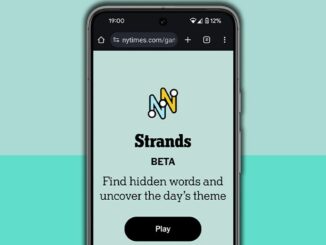
Looking for a different day? A new NYT Strands puzzle appears at midnight each day for your time zone – which means that some people are always playing ‘today’s game’ while others are playing ‘yesterday’s’. If you’re looking for Wednesday’s puzzle instead then click here: NYT Strands hints and answers for Wednesday, September 10 (game #556). Strands is the NYT’s latest word game after the likes of Wordle, Spelling Bee and Connections – and it’s great fun. It can be difficult, though, so read on for my Strands hints. Want more word-based fun? Then check out my NYT Connections today and Quordle today pages for hints and answers for those games, and Marc’s Wordle today page for the original viral word game. SPOILER WARNING: Information about NYT Strands today is below, so don’t read on if you don’t want to know the answers. NYT Strands today (game #557) – hint #1 – today’s theme What is the […]
The head of the UN’s atomic energy agency announced on Wednesday that a deal has been struck with Iran to resume cooperation on inspections of Tehran’s nuclear facilities.
Many of you may have already noticed big traffic and ranking changes on your website, and it’s the shift from SEO to GEO that’s to blame. Instead of avoiding making necessary changes, it’s time to embrace the new reality to overcome your visibility struggles. This post was first published on eLearning Industry. SEO Source: eLearning Industry Read More