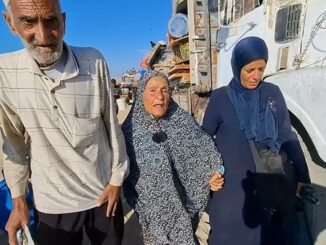
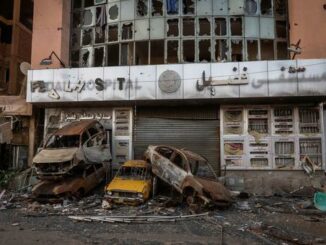
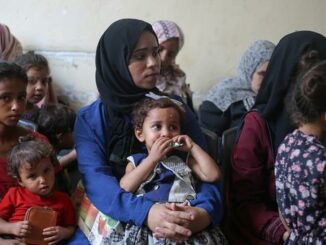
In the face of escalating Israeli military operations, thousands of Palestinian families continue to flee the northern Gaza Strip amid dire humanitarian conditions and transportation shortages.
Looking for a different day? A new NYT Strands puzzle appears at midnight each day for your time zone – which means that some people are always playing ‘today’s game’ while others are playing ‘yesterday’s’. If you’re looking for Friday’s puzzle instead then click here: NYT Strands hints and answers for Friday, September 19 (game #565). Strands is the NYT’s latest word game after the likes of Wordle, Spelling Bee and Connections – and it’s great fun. It can be difficult, though, so read on for my Strands hints. Want more word-based fun? Then check out my NYT Connections today and Quordle today pages for hints and answers for those games, and Marc’s Wordle today page for the original viral word game. SPOILER WARNING: Information about NYT Strands today is below, so don’t read on if you don’t want to know the answers. NYT Strands today (game #566) – hint #1 – today’s theme What is the […]
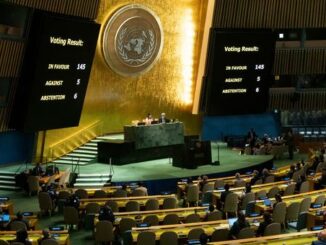
The UN General Assembly on Friday adopted a resolution allowing Palestinian President Mahmoud Abbas to address next week’s high-level debate by pre-recorded video after the United States refused to issue visas for Palestine’s delegation.
Fifteen-year-old Reyyan Demiriz from Türkiye has been awarded first prize in a UN young writers’ competition which garnered a staggering 1.6 million entries from 65 different countries.
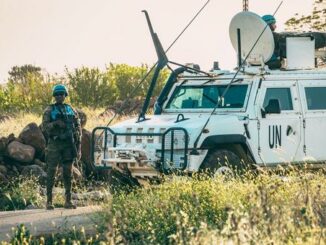
The UN peacekeeping mission in Lebanon (UNIFIL) on Friday called on the Israeli Defense Forces (IDF) to refrain from further strikes and fully withdraw from Lebanese territory after Israeli strikes endangered peacekeepers and civilians overnight.
The flipped classroom method is an innovative pedagogical approach that inverts traditional teaching structures by shifting instructional content delivery outside of the classroom and moving practice and application activities into class time. In a conventional classroom, teachers present new material during class and assign homework for students to complete independently. The flipped classroom model reverses this format: students first engage with new concepts through pre-class assignments—such as reading, watching recorded lectures, or interactive modules—allowing them to progress at their own pace. This shift capitalizes on the capabilities of technology and digital resources, giving students the opportunity for repeated review, self-paced learning, and increased engagement with foundational material prior to classroom interaction. During in-person class sessions, the role of the teacher transforms from a lecturer to a facilitator or coach. Class time is dedicated to collaborative exercises, active problem-solving, peer instruction, and Socratic dialogue. This structure affords students richer opportunities to apply concepts, ask targeted questions, and receive […]
AI integration into LMSs can yield personalized learning, scalable content creation, real-time support, predictive intervention, and deep insights. Start with strategic tools to guide your path toward effective, future-proof eLearning. This post was first published on eLearning Industry. Artificial Intelligence Source: eLearning Industry Read More
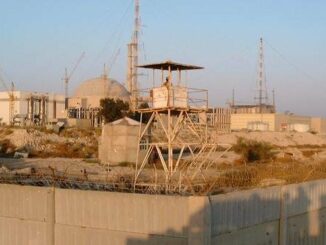
A proposal to continue sanctions relief for Iran under the 2015 nuclear deal was rejected in the UN Security Council on Friday in a vote that revealed deep divisions over the so-called “snapback” process.
At least 75 people have been killed, according to news reports, in a drone strike on a mosque during morning prayers in El Fasher city, in the west of the war-torn country.
Humanitarian aid in Gaza must be protected, the UN Children’s Fund (UNICEF) said on Friday, following the theft of therapeutic food critical for saving thousands of young lives from malnutrition as famine spreads.
This article explores how integrating AI with scaffolding, chunking, and the zone of proximal development (ZPD) can make corporate learning more accessible and effective for ESL employees. This post was first published on eLearning Industry. Instructional Design Source: eLearning Industry Read More
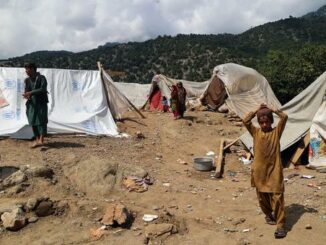
Women and girls still reeling from Afghanistan’s deadly earthquake face even greater suffering rebuilding their lives and livelihoods – with little help to hand, gender equality agency UN Women said on Friday.