As tensions between Houthi rebels in Yemen and Israel escalate, the UN Secretary-General is “deeply concerned” about the renewed airstrikes on Hudaydah Port conducted by Israel this Monday, Spokesperson Stéphane Dujarric told journalists in New York.
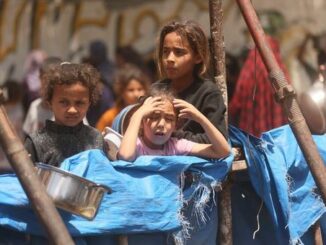
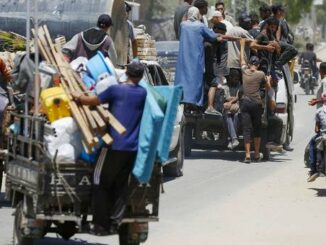
The hunger crisis in Gaza has reached new and astonishing levels of desperation, with a third of the population not eating for multiple days in a row, a senior official with the UN World Food Programme (WFP) said on Monday.
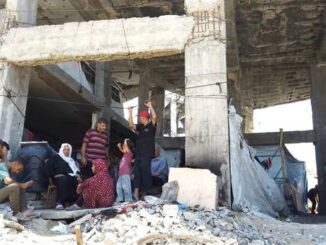
UN Secretary-General António Guterres is appalled by the accelerating breakdown of humanitarian conditions in Gaza, where the last lifelines keeping people alive are collapsing, his Spokesperson said on Monday.
Citing new global agreements on pandemic preparedness, ocean protection and development financing, UN Secretary‑General António Guterres said on Monday that recent “signs of momentum” show multilateralism can still deliver.
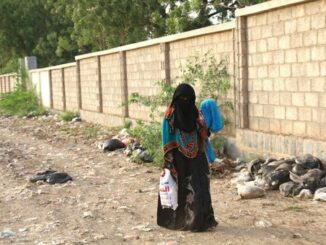
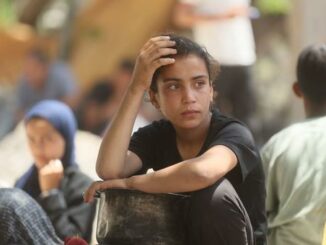
Hadriya collapses from hunger, Khadija dreams of her kitchen and Hiyam longs for her daughters’ laughter in the garden – these are the stories of three women from Gaza who embody the daily struggles of mothers exhausted by war, hunger and displacement as the nearly two-year-long conflict continues.
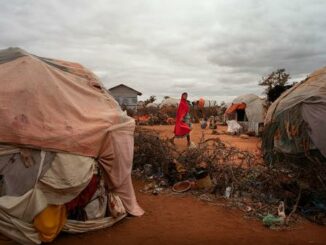
Worldwide, some of the most widespread and damaging drought events in recorded history have occurred in recent years due to climate change and resource depletion.
After another deadly weekend in Gaza in which at least 67 Palestinians were reportedly killed seeking food, UN aid teams on Monday described “mayhem” and starvation in the enclave as the Israeli military pushed into Deir Al-Balah for the first time.
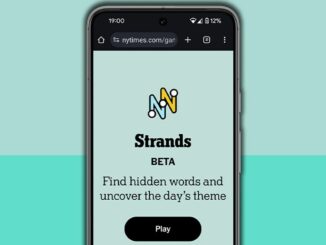
Looking for a different day? A new NYT Strands puzzle appears at midnight each day for your time zone – which means that some people are always playing ‘today’s game’ while others are playing ‘yesterday’s’. If you’re looking for Monday’s puzzle instead then click here: NYT Strands hints and answers for Monday, July 21 (game #505). Strands is the NYT’s latest word game after the likes of Wordle, Spelling Bee and Connections – and it’s great fun. It can be difficult, though, so read on for my Strands hints. Want more word-based fun? Then check out my NYT Connections today and Quordle today pages for hints and answers for those games, and Marc’s Wordle today page for the original viral word game. SPOILER WARNING: Information about NYT Strands today is below, so don’t read on if you don’t want to know the answers. NYT Strands today (game #506) – hint #1 – today’s theme What is the […]
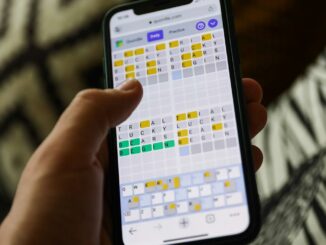
Looking for a different day? A new Quordle puzzle appears at midnight each day for your time zone – which means that some people are always playing ‘today’s game’ while others are playing ‘yesterday’s’. If you’re looking for Monday’s puzzle instead then click here: Quordle hints and answers for Monday, July 21 (game #1274). Quordle was one of the original Wordle alternatives and is still going strong now more than 1,100 games later. It offers a genuine challenge, though, so read on if you need some Quordle hints today – or scroll down further for the answers. Enjoy playing word games? You can also check out my NYT Connections today and NYT Strands today pages for hints and answers for those puzzles, while Marc’s Wordle today column covers the original viral word game. SPOILER WARNING: Information about Quordle today is below, so don’t read on if you don’t want to know the answers. Quordle today (game #1275) […]
Project-Based Learning (PBL): A Scientific Overview Project-Based Learning (PBL) is an instructional methodology grounded in constructivist educational theory, emphasizing active engagement and inquiry-based learning. In PBL, students gain a deeper understanding of subject matter by investigating complex, real-world problems and creating meaningful projects over an extended period. Rather than passively absorbing information through lectures and rote memorization, learners actively construct knowledge by experiencing, questioning, collaborating, and reflecting, which aligns with the cognitive principles articulated by educational theorists such as Jean Piaget, Lev Vygotsky, and John Dewey. Central to PBL is the design of authentic tasks that require critical thinking, problem-solving, creativity, and communication. Projects are typically multidisciplinary, integrating content from subjects such as science, mathematics, language arts, and social studies. The process often begins with a driving question or challenge, requiring students to research, experiment, and iterate solutions, often working collaboratively in teams. Throughout the project, students regularly present their findings, seek feedback, and revise their work, […]
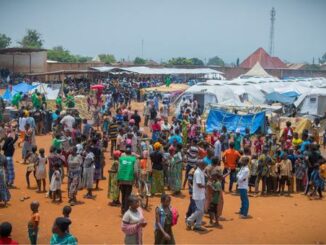
An agreement signed by the Government of the Democratic Republic of the Congo (DRC) and the Congo River Alliance/March 23 Movement (AFC/M23) has been hailed by the UN peacekeeping mission in the country (MONUSCO) as “an important step towards sustainable peace.”